Keynote Speakers
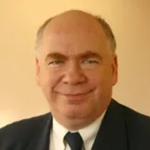
Professor Sir Lawrence Freedman Emeritus
Professor of War Studies
Biography
Professor Sir Lawrence Freedman is Emeritus Professor of War Studies, King's College London. He was Professor of War Studies from 1982 to 2014 and Vice-Principal from 2003 to 2013.He was educated at Whitley Bay Grammar School and the Universities of Manchester, York and Oxford. Before joining King's he held research appointments at Nuffield College Oxford, the International Institute for Strategic Studies and the Royal Institute of International Affairs. Elected a Fellow of the British Academy in 1995 and awarded the CBE (Commander of the British Empire) in 1996, he was appointed Official Historian of the Falklands Campaign in 1997. In 2003, he was awarded the KCMG (Knight Commander of St Michael and St George). In June 2009 he was appointed to serve as a member of the official inquiry into Britain and the 2003 Iraq War.
He has written on international history, strategic theory and nuclear weapons issues, as well as commenting on current security issues. Among his recent books are Strategy: A History (2013), the Future of War: A History (2017), Ukraine and the Art of Strategy (2019) and, with Jeff Michaels, the 4th edition of The Evolution of Nuclear Strategy (2019). He is currently working on a book on the Politics of Command.
Co-author of Signals of War: The Falklands Conflict of 1982, (1990).
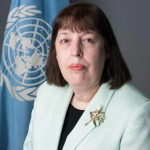
Professor Virginia Gamba
Biography
United Nations Secretary-General António Guterres appointed Virginia Gamba of Argentina as his Special Representative for Children and Armed Conflict at the level of Under-Secretary-General. She is currently one of five candidates for UN Secretary General.
Previously she has served as Assistant Secretary-General and Head of the Organisation for the Prohibition of Chemical Weapons-United Nations Joint Investigative Mechanism established by Security Council resolution 2235 (2015) on the use of chemicals as weapons in Syria, Ms. Gamba brings more than 30 years of experience and professional leadership on issues relative to disarmament, peace and human security.
She previously served as Director and Deputy to the High Representative for Disarmament Affairs in the United Nations Office for Disarmament Affairs (2012-2015); Deputy Director, Safety and Security, Institute for Public Safety, Ministry of Justice, Government of City, Buenos Aires (2009-2012); Expert Consultant for the European Union to assist the African Union with the Development of the Implementation Strategy for the African Common Approach to Combat Illicit Small Arms Trafficking (2007-2009); Director for South-South Interactions, SaferAfrica, South Africa (2001-2007); Deputy Director, Institute for Security Studies, South Africa (1996-2001) and Director of the Disarmament and Conflict Resolution Programme, United Nations Institute for Disarmament Research, Geneva (1992-1996).
Born in 1954, she holds a MSc. (Eco) in Strategic Studies, University College of Wales and a B.A. (Hons) Spanish and American Studies, University of Newcastle Upon Tyne. Served as Senior Lecturer, Latin American Security Studies, Department of War Studies, King’s College, London.
Co-author of Signals of War: The Falklands Conflict of 1982, (1990).
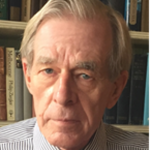
Rear Admiral Jeremy Larken DSO FInstD
Biography
Initially a Cold War submariner, Jeremy Larken became an amphibious and hence Joint Warfare operational commander. As such he is the last surviving CO of the large Falklands Conflict RN ships (HERMES, INVINCIBLE, FEARLESS and INTREPID), still working as a consultant in Crisis Management and the associated acute leadership challenges.
He joined the Royal Navy in 1957. Early into nuclear-powered attack submarines (SSNs), he was then First Lieutenant of HMS OTUS (SSK), before the Submarine Command Qualifying Course (Perisher) under Commander Sandy Woodward. First Command was HMS OSIRIS (SSK) at a time of increasingly aggressive Soviet excursions into the Atlantic. There followed exchange service with the US Submarine Force, assigned astonishing levels of responsibility for SSN tactical development.
Promoted Commander in 1973, as Second in Command (XO) HMS GLAMORGAN (guided missile destroyer), he took command on sickness of his Captain, serving also as Flag Captain to Rear Admiral John Fieldhouse. There followed a year as Cdr (SM), Submarine Sea Training, another as CO of HMS VALIANT, and yet another in the MoD Naval Plans Division.
As Captain in 1979, he took command of the Third Submarine Squadron (6 SSNs and 2 SSKs), for Cold War operations and further tactical development with the USN - moving to assault ship HMS FEARLESS in 1981 and duly the Falklands Campaign, also as Chief of Staff to the Commodore Michael Clapp, the amphibious Maritime Force Commander. In 1983 he returned to Naval Plans, then setting up the Naval Staff Directorate in 1985. His final sea-going appointment was Commodore Amphibious Warfare and Commander NATO UK/NL Amphibious Force, with HMS INTREPID his command ship.
On promotion to Rear Admiral he returned to MoD on the Central Staff with responsibility for UK military activity and missions outside the NATO area. He left the RN in 1990.
Header photo: Courtesy of Commander Graham Edmonds.